
Your Team is Performing Together, But Not Creating Together



Most leaders use the word teamwork for almost everything people do together.
A status meeting is teamwork.
A project review is teamwork.
A brainstorming session is teamwork.
A strategy offsite is teamwork.
But these are not the same kind of work. And when leaders treat them like they are, teams slowly lose energy.
People walk into rooms without knowing what the room is for. Are we reporting progress? Are we solving a problem? Are we being told what to do? Are we allowed to challenge the direction? Are we building something together, or just reacting to a plan that already exists?
That confusion matters.
Because a team can be busy, in sync, and accountable, and still not be creating anything new.
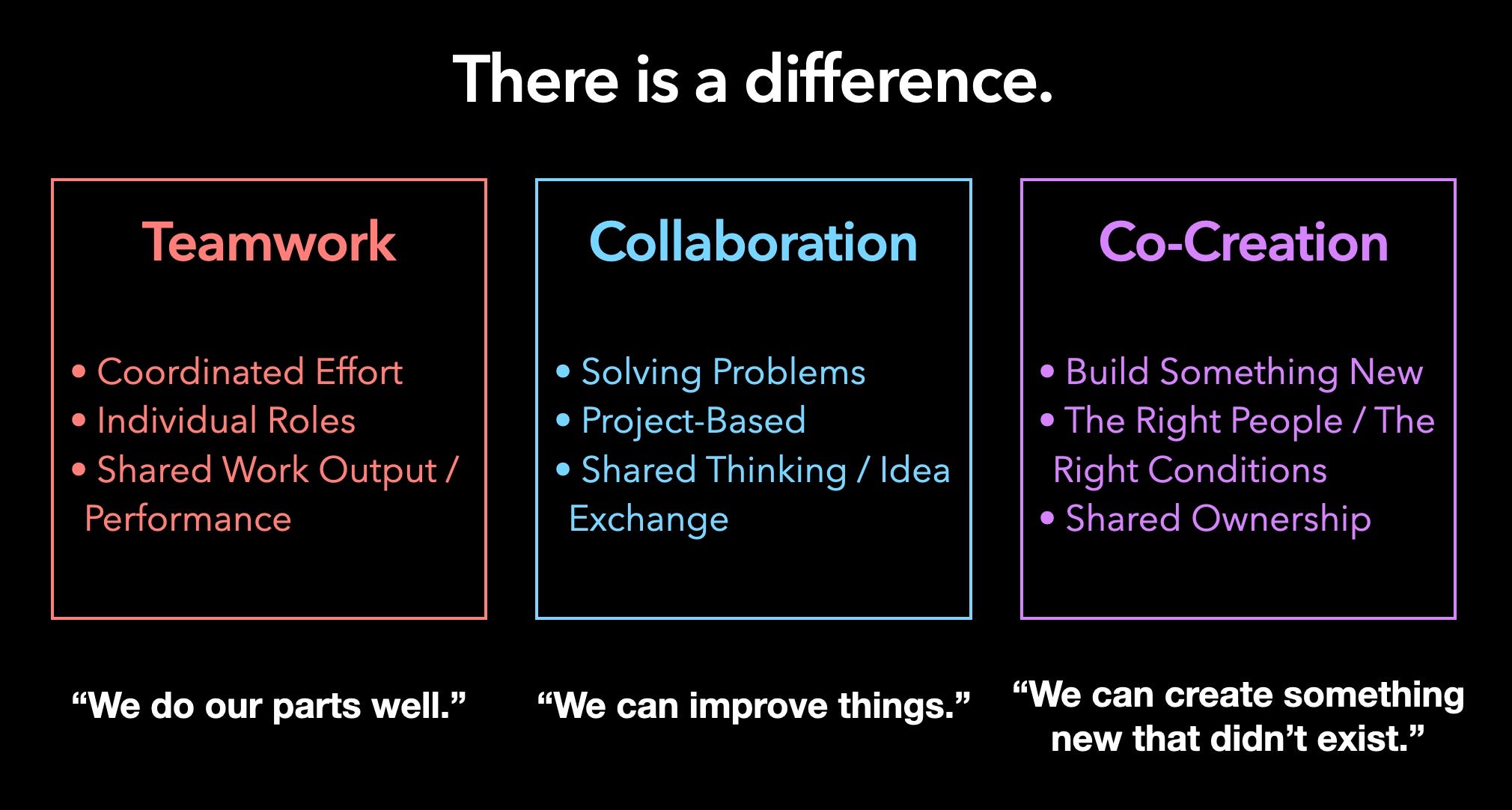
Teamwork Coordinates the Work
Teamwork helps people know their part and do it well.
People know their roles. They understand their responsibilities. They complete their part of the work. They make the handoffs. They help the group perform.
Teamwork meetings usually look like routine touchpoints: status updates, progress reports, timeline checks, ownership reviews, and directives from management.
What is done?
What is stuck?
Who owns the next step?
The goal is performance. The energy is about clarity, movement, and results.
This kind of meeting matters. Without it, work gets sloppy. People miss details. Accountability gets blurry. The team loses rhythm.
Teamwork says, “We do our parts well.”
But teamwork has limits.
A team can perform well and still feel uninspired. People can stay in their lanes so long that they stop seeing the larger picture. They can hit the numbers while quietly wondering whether the work is getting better, or just getting done.
Collaboration Improves the Work
Collaboration usually begins when something needs to be solved or improved.
A process is broken. A project is off track. A customer experience needs attention. A team keeps running into the same issue. Something is not working, and people need to think together.
Collaboration meetings are usually project-based, assigned, and time bound. The focus is shared thinking, ideation, and problem solving.
What is the issue?
What are we missing?
How do we improve this?
Collaboration says, “We can make this better.”
This is a different kind of energy. It is not just reporting. It is wrestling. People compare perspectives, challenge assumptions, and look for a better answer.
But even collaboration can become exhausting if all the team does is fix things.
There is a difference between the energy of repair and the energy of creation.
Fixing often comes with pressure. Something has gone wrong. Time is short. Leaders want relief. The tone can become tense, reactive, and short term.
Creation has a different feeling. It gives people a reason to lift their eyes.
Co-Creation Creates What Comes Next
Co-creation is not just solving a problem. It is imagining and building something new together.
A co-creative meeting starts with a different question.
Not only, “What is broken?”
But, “What could this become?”
That shift changes the room.
The goal is not just performance. It is not just improvement. The goal is creation and shared ownership.
Co-creation requires the right voices, perspectives, and skilled people in the room early enough to shape the work. Not after the decision has already been made. Not after the plan is almost finished. Not when people are only being asked to approve, react, or clean it up.
Co-creation works when people have real influence over what gets built.
That could be a product, a strategy, a customer experience, a culture shift, a leadership experience, or a new way of working.
The people in the room are not just helping execute the answer. They are helping create it.
Co-creation says, “We can build something new that did not exist before.”
The Point Is Not to Replace Everything
Co-creation is not better for every meeting.
Some meetings should coordinate the work. Some should improve the work. Some should create what comes next.
The problem is that many teams only know how to coordinate and fix. They spend most of their time chasing updates, managing performance, and solving the latest issue. That work is necessary, but it does not always create renewal.
This may be why so many leaders feel stuck. They are getting more disciplined about performance, but they are not building the team’s capacity to imagine, shape, and own the future together.
Free Lightning Lesson
If your team is stuck in status updates, problem solving, and performance pressure, this lesson is designed to help you see what may be missing.
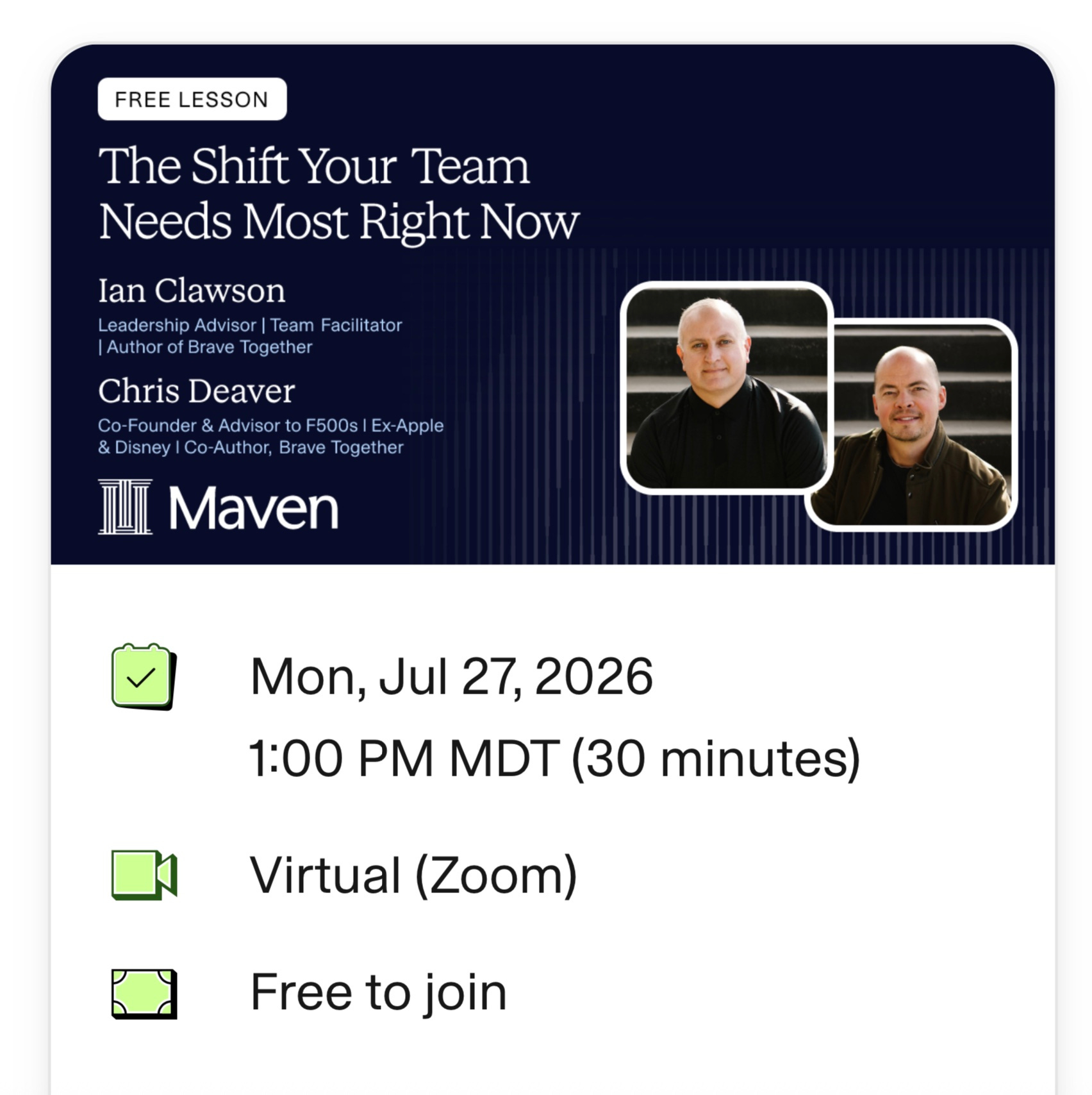
On July 27, we are hosting a free 30-minute Maven session on the leadership shift teams need now: moving from coordination and fixing into deeper co-creation.
[Join us]
The Team Needs to Know What the Room Is For
A leader’s job is not to call everything teamwork.
A leader’s job is to make sure people understand what the room is actually asking of them.
Are we here to coordinate the work?
Are we here to improve the work?
Or are we here to create something new together?
Each one matters. Each one needs different conditions.
A coordination room needs clarity.
An improvement room needs honesty.
A creation room needs trust, imagination, and shared ownership.
When leaders blur the difference, teams default to updates and fixes. They stay busy. They stay responsive. They may even perform well for a while. But they do not always build the capacity to create what comes next.
That is the deeper risk.
A team can spend years getting better at managing the work in front of them while slowly losing the energy to imagine a better future.
Not every meeting needs to be co-creative. Some meetings should help the team stay aligned. Some should help the team solve a specific problem. But some rooms need to be protected for creation.
The best leaders know the difference.
Teamwork helps us perform.
Collaboration helps us improve.
Co-creation helps us build the future together.
Written by Ian Clawson.
Ian is co-founder with Chris Deaver of BraveCore, a consultancy that helps leaders build cultures people love; and co-author of Brave Together: Lead by Design, Spark Creativity, and Shape the Future with the Power of Co-Creation.
Should We Work Together?
BraveCore helps leaders and teams build cultures people want to be part of.
When we’re not writing, we’re working with leaders in tech, healthcare, and growing organizations who are navigating change, complexity, and the human side of performance.
Sometimes the work starts with a few honest conversations. Sometimes it becomes a workshop, coaching engagement, offsite, or longer partnership.
But the deeper work is the same: helping teams rebuild trust, create real alignment, and build a culture that can grow without burning people out.
If this piece feels close to what your team is experiencing, we’d be happy to talk.