
The Bureaucracy Trap
When process replaces trust and agency fades.


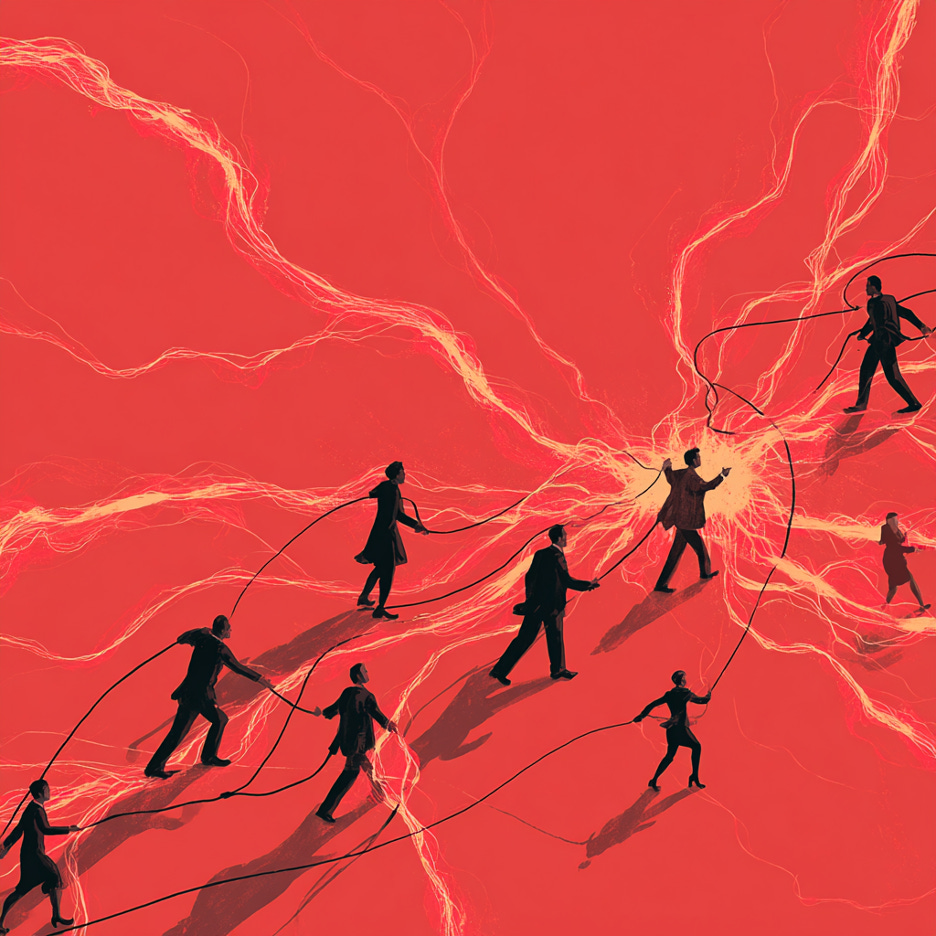
Bureaucracy rarely announces itself. It gathers in small pauses, extra CCs, careful phrasing, the need to “double check” anything before it moves up the chain or goes out to customers. Over time, work feels less like building and more like navigating.
Most complexity starts with good intent. We want fairness, safety, and some consistency when mistakes are expensive and things are messy. So we add structure, and at first it helps. It makes decisions feel less personal and the uncertainty easier to live with. It also feels fair because everyone follows the same steps.
The idea is simple: if we follow the process, we’ll be protected when things go wrong. But that kind of safety only goes so far. Process can reduce chaos, but it cannot replace trust between people.
That’s why control can feel like a relief. It gives people something to point to. If the process is in charge, no one has to stick their neck out alone. The trap starts when that becomes the go-to move, and adding steps replaces just talking to each other.
Then process stops helping the work and starts setting the tone. People learn what feels safe, what gets praised, and what gets you burned. Leaders might still say they want ownership, but the message people pick up is: don’t move without backup.
Control can steady things for a bit. Over time, it teaches people to wait. And pretty soon, asking for permission is just how things get done.
Permission Seeking Culture
When asking for permission becomes normal, process starts telling people what they need to do to stay safe here.
A lot of teams can feel the shift: we were told to trust the process. Somewhere along the way, we stopped trusting each other.
When trust gets thin, process grows. Not always because someone wants control. Often because nobody wants to name what’s really going on: uncertainty, doubt, and fear of getting blamed. It’s easier to add a step than to say, “We don’t feel good about this.”
You can see it in the patterns. Decisions get pushed up the chain. Proposals come with a lot of hedging. “Alignment” gets required before anything moves.
In healthy teams, alignment means we’re on the same page. We know what matters, we see the same problem, we can move. In permission-seeking cultures, alignment becomes approval. People aren’t looking for clarity, they’re looking for cover. And underneath the coordination is often a simple question: if this goes sideways, will you have my back?
This is how escalation becomes the default. It looks responsible. It sounds thorough. But a lot of the time it’s just people trying not to get burned. So, they pull in more names, forward more threads, and “run it by” more people so the risk doesn’t sit on them alone.
After a while, the whole thing flips. The people closest to the work know the most, but they get the least say. They gather the info, make the case, and wait. The people farthest from the work end up deciding with a partial view. Leaders become the place where decisions go to wait.
Then everyone asks, “Why won’t people take ownership?” Ownership fades when judgment feels risky. When playing it safe gets rewarded, people play it safe. From the outside it can look like professionalism. On the inside it feels like caution. And you end up with smart people who don’t feel free to choose.
The Return of Agency
When people stop choosing, they eventually stop caring. Agency brings care back.
You can see it in craftsmanship. Craftsmanship is what work looks like when someone really owns it. They care about the outcome. They think about who it affects. They pay attention to the details, even when nobody is watching. That kind of care needs responsibility, because responsibility makes it personal.
In a bureaucratic system, the question changes. It stops being ‘Is this right?’ and starts being ‘Will this get approved?’ People spend more time justifying the work than doing the work. Approval becomes the finish line, and “good” starts to mean “it won’t get rejected.”
Some of the cost shows up in speed. The bigger cost is what it does to people. When it feels risky to use judgment, people hold back. They get quieter. They stop offering ideas. They do what’s asked and nothing more. Everything can look organized, while trust and honesty fade.
Agency comes back when work gets built together again.
Co-creation is simple. The people closest to the work help shape the decision. They are treated like owners, not handoffs. Decisions get made with real context in the room, with tradeoffs said out loud, and with shared responsibility for what happens next.
That’s how trust rebuilds. People carry responsibility in the open. Leaders still lead, but they do not take the work away. They make it safer to tell the truth, and they help teams build judgment instead of pushing everything up the chain.
A few commitments help hold that line.
Say what needs to be true for people to act. Clarity helps people move.
Keep authority close to the information. Decisions get worse the farther they are from the work.
Treat judgment like a skill. It grows when people get to use it, together, in the real work.
Questions worth asking:
Where has process become a way to stay safe?
What decisions do people avoid owning unless a leader signs off?
What gets rewarded more: clean paperwork or real responsibility?
Bureaucracy usually doesn’t come from bad intent. It builds up when people are trying to avoid mistakes and avoid blame. The way out starts when leaders bring agency back through shared ownership and clear boundaries, and when the culture can handle real conversations without hiding behind process.
In the end, the most expensive loss is agency. Ownership fades with it.
Should We Work Together?
BraveCore helps leaders and teams build cultures people want to be part of.
When we’re not writing, we’re working with leaders in tech, healthcare, and growing organizations who are dealing with change, complexity, and the human side of performance. Sometimes it’s a few important conversations. Sometimes it’s workshops, coaching, or a longer partnership. The goal stays the same: rebuild trust, create real alignment, and build a culture that can grow without burning people out.
If this piece connects with what you’re seeing in your own organization, it might be worth talking.
DM or comment “BRAVESPACE” and we’ll send our 2 page overview. It shows how we help teams rebuild trust and clarity with a co-creative approach.
Written by Ian Clawson.
Ian is co-founder with Chris Deaver of BraveCore, a consultancy that helps leaders build cultures people love; and co-author of Brave Together: Lead by Design, Spark Creativity, and Shape the Future with the Power of Co-Creation.